
9 hr 30 min
Pinnacles Desert Sunset BBQ, Stargazing & Sandboarding Tour
Sandboard giant dunes, watch sunset over the Pinnacles, feast on BBQ & gaze at southern stars.
Reserve
Hand-picked by our editors — only the best 5 Pinnacles Sunset Stargazing Day Tour tours from 140 reviewed.
Verified partners for every tour, free cancellation where available, and instant confirmation on every booking.
9 hr 30 min
Sandboard giant dunes, watch sunset over the Pinnacles, feast on BBQ & gaze at southern stars.
Reserve
9 hr
Full-day trip from Perth to the Pinnacles Desert with sunset views, picnic dinner and telescope stargazing.
Reserve
9 hr
Sunset over ancient limestone spires, a hearty pub dinner, then stars without a hint of city light.
ReservePrices from verified partners. Availability updates in real time at checkout. Free cancellation policies apply where shown.
The landmarks, rooms, and views travelers on this tour remember — all visible on a single visit.
This is the main route through the limestone field, and it is listed by DBCA as a 4.3 kilometre trail. The formations vary in height and spacing, which makes each bend feel different in sunset light. The drive works well because you can combine short stops with low-effort viewing.
At 1.6 kilometres, this short trail gives a closer ground-level look at the pinnacles. It is a useful contrast to the drive because you can study texture, shadows, and the scale of the spires up close. The shorter length also makes it easy to fit into a day tour schedule.
The entry road sets the transition from coastal highway to desert landscape. It is where the park-fee journey begins, and the contrast between the road surface and the limestone field is part of the experience. This approach helps frame the Pinnacles as part of a larger protected landscape rather than a single viewpoint.
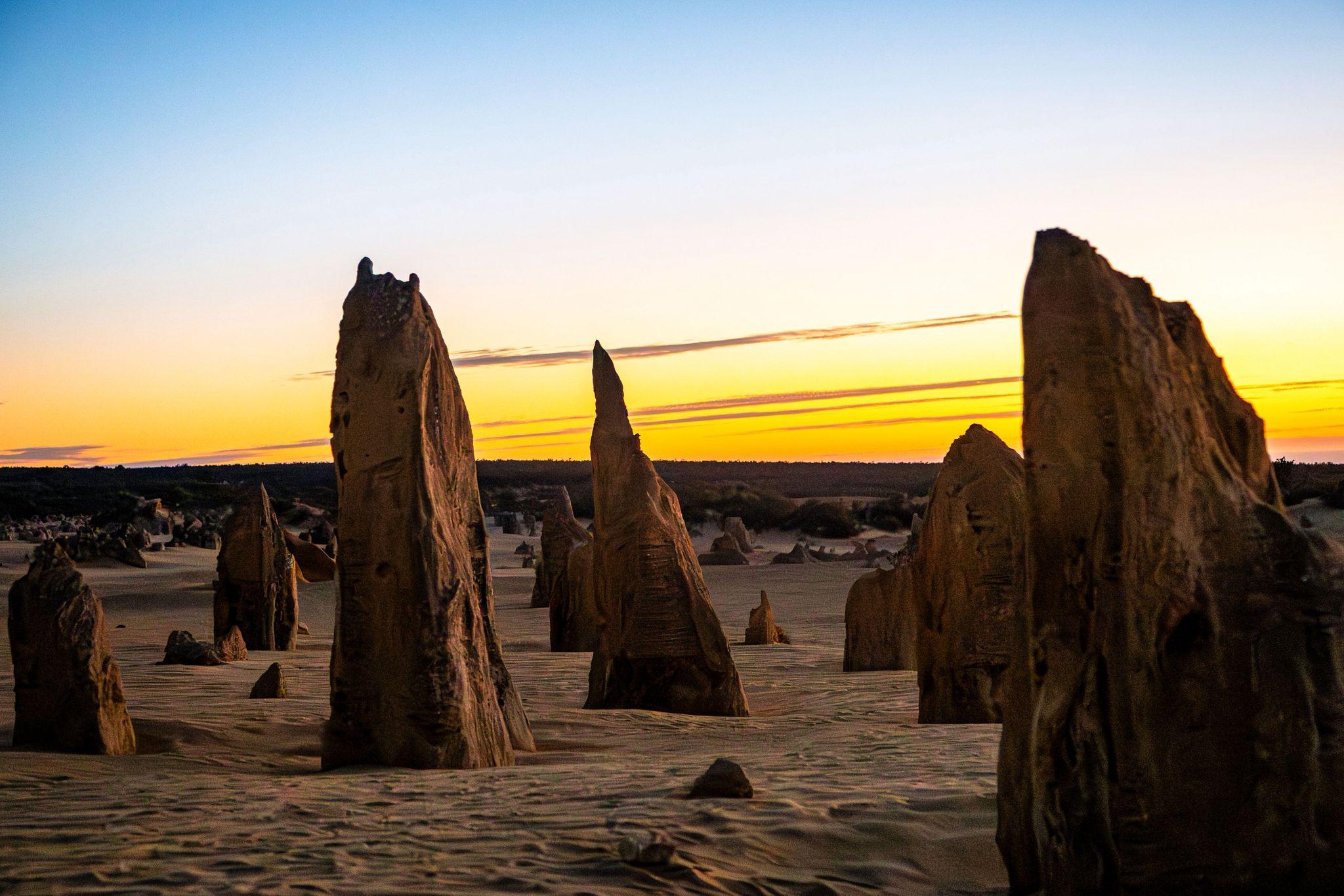
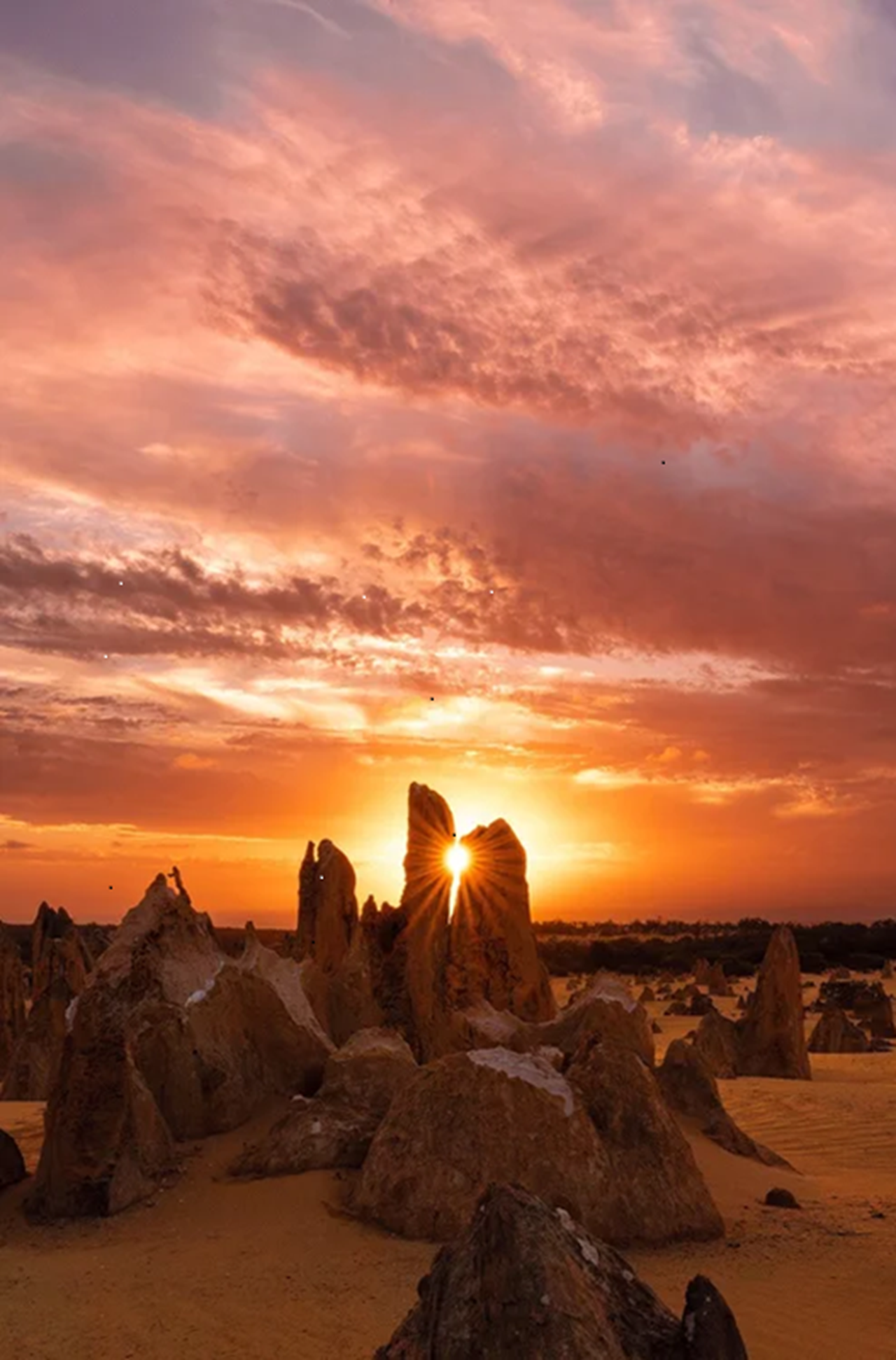
The pinnacles themselves are the signature sub-landmark, formed from Tamala Limestone and wind-blown calcarenite. Some stand alone like towers, while others cluster in groups that catch side light differently across the evening. The field is most readable at low sun because shadows reveal the shapes more clearly.
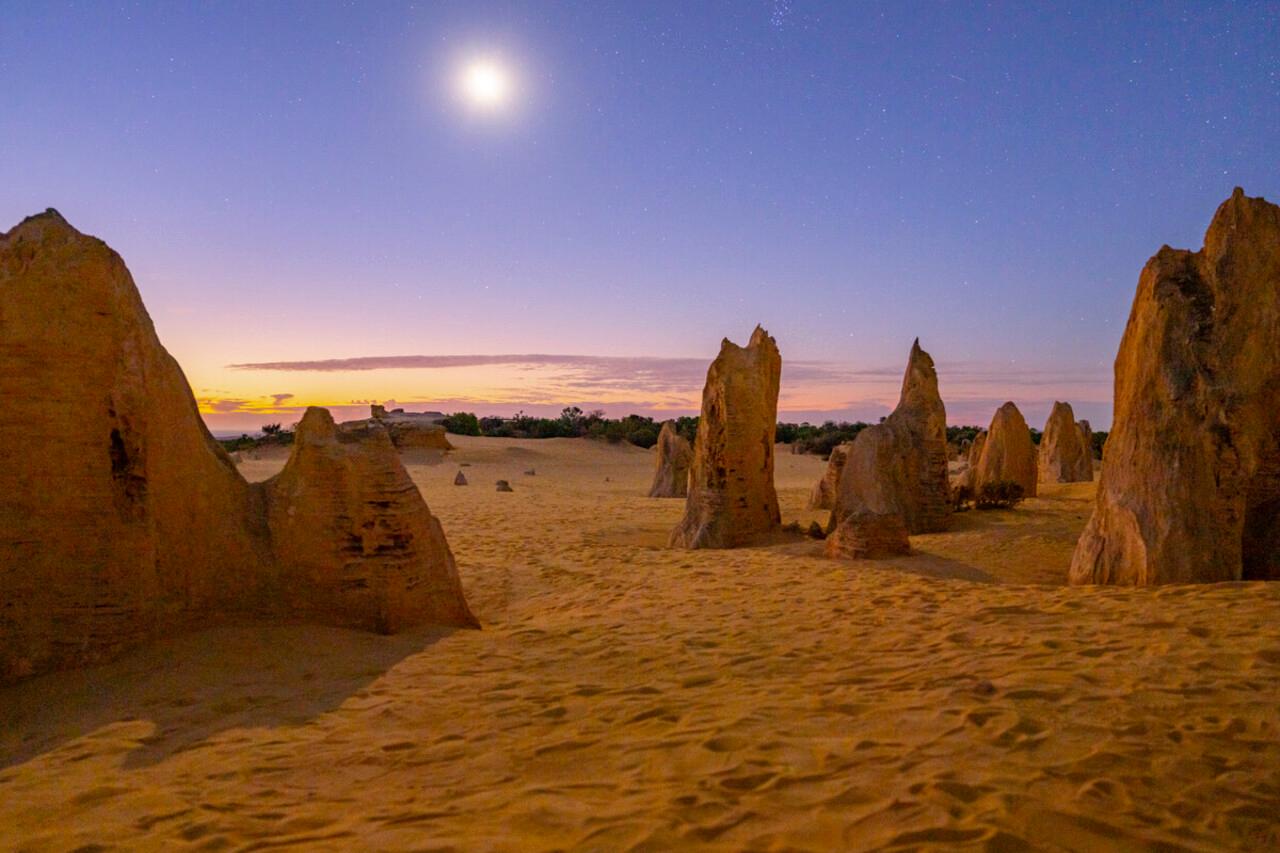
After sunset, the open plain becomes a natural sky window with little visual clutter. That makes the area well suited to stargazing, especially when you keep light use minimal and stay within safe viewing zones. A dark-sky composition works best with the foreground silhouettes of the spires.
They complement different travel styles: the pinnacles sunset stargazing day tour is the better pick for a desert-after-dark experience, while the rival is the stronger choice if you want a coastal, food-led day with the Pinnacles as one stop.
| Feature | Top pick Sunset Stargazing Tour | Lobster Shack Day Trip |
|---|---|---|
Primary focus |
Desert sunset, night sky | Coastal food and Pinnacles |
What the day feels like |
Dusk-to-dark, atmospheric | Road-trip, lunch-focused |
Best for |
Star-gazers, desert views | Seafood fans, mixed-sightseeing |
Time on foot |
Light walking at site | Short walks, multiple stops |
Evening light / stargazing |
Built around sunset and stars | Little emphasis on night sky |
Food emphasis |
Dinner included, secondary | Lobster Shack lunch, central |
Drive length / pace |
Longer, slower evening pace | Shorter, daytime sightseeing pace |
| See tickets → |
Verdict: Choose the pinnacles sunset stargazing day tour for the more immersive desert evening, and pick the Lobster Shack trip if you want a broader Perth-area day built around lunch and coastal stops.
Choose your ticket, select your date, and reserve in under two minutes. Secure checkout handled by our verified partner.
Instant confirmation by email, with a mobile voucher you can save offline. No printing, no queuing at a collection desk.
Arrive at the entrance, show your voucher on your phone, and walk in. Most tickets include priority or skip-the-line access.
Practical details for your visit straight from our verified partners — hours, access, rules, and how to get there.
Indian Ocean Drive, Cervantes, Western Australia
Primary access point for the park and entry gate
Drive north from Perth on Indian Ocean Drive, then turn onto Pinnacles Road to reach the park entrance. The official visitor material places the Pinnacles area about 10–11 km from Cervantes, so a self-drive is the most direct option.
There is no simple rail or city-transit service to the Pinnacles entrance, so travelers usually combine long-distance coach travel with a hire car or guided tour. Transwa lists Cervantes as a Coral Coast destination area, but it is not a doorstep park shuttle.
A local taxi or pre-booked transfer from Cervantes can work for short hops, but it is not the typical day-trip mode from Perth. Use it mainly if you are already staying in town.
For a pinnacles sunset stargazing day tour, dress for strong sun, wind, and a sharp temperature drop after sunset. A hat, sunscreen, and closed-toe shoes are practical for the limestone paths and unsealed surface.
Day bags are fine, but keep them compact so you can move easily on the loop and at viewing stops. The park guidance focuses on environmental protection rather than bag screening; carry out all rubbish and keep valuables secured in the vehicle.
A pinnacles sunset stargazing day tour works well for wide-angle landscape shots at golden hour and low-light sky photos later on. Tripods are useful after dark, but avoid stepping off marked areas to frame the limestone spires.
The official material notes the 4 km unsealed Pinnacles loop and also a park walk option of about 1 hour. For mobility needs, the best approach is to use the drive and short stop points rather than planning a full walk.
Families usually find the drive route easier than a full walk because children can rotate between lookout stops and short shoreline-style pauses. Keep children close to marked areas; the limestone terrain and sand can be uneven after dark.
Bring drinking water and light snacks, because the desert setting and long evening light can run later than expected. Park guidance also says hats, sunscreen, and water are essential, especially in summer.
The Pinnacles Desert is inside Nambung National Park, where the visitor guide emphasizes protection of the limestone formations and sensitive desert environment. A pinnacles sunset stargazing day tour usually combines late-afternoon driving, sunset stops, and a darker-sky return, so plan around the 15:30–17:30 arrival window.
Indian Ocean Drive, Cervantes, Western Australia
Primary access point for the park and entry gate
Get directionsBest time to go, insider tips, nearby landmarks, and the cancellation fine print — flip through to skim what matters to you.
How crowds, weather, and events shift across the year.
Expect hot, dry conditions and stronger wind exposure across the open limestone field. The official guidance says hats, sunscreen, and water are essential, and a late afternoon arrival is the safest way to catch sunset without heat stress.
Comfortable evening temperatures make the sunset-to-night transition easier. This is one of the better windows for a pinnacles sunset stargazing day tour because the sky stays clear while the daytime heat eases.
Cooler afternoons make walking the loop more pleasant, but sunset arrives earlier, so plan to be in place well before dusk. Nights can feel cold and windy, which helps after-dark viewing but means layers are useful.
Wildflower season on the Turquoise Coast can add a broader road-trip payoff to a Pinnacles visit. Expect busier weekends and school-holiday traffic, especially from Perth-bound day-trippers.
This shoulder period often balances mild weather and good light. A pinnacles sunset stargazing day tour can pair well with clearer evening skies and less midday heat than summer.
Small details that turn a good visit into a great one.
The official arrival window is 15:30–17:30, which is the best balance of sunset color and cooler temperatures. Earlier arrival can mean stronger heat and harsher shadows across the limestone.
The 4 km loop is ideal for a slow circuit with short stop-offs rather than a fast in-and-out visit. If you want less walking, keep the car mobile and use marked pull-offs.
The desert cools quickly after dark, so a light jacket can matter even when the afternoon feels hot. This is especially helpful on a pinnacles sunset stargazing day tour.
Switch off bright headlights once parked and use a dim torch if you need to move around. That helps preserve dark adaptation for stargazing and lowers glare in photos.
Pets, camping, and open fires are prohibited in the park, and the official guide also says not to leave litter behind. Keeping to marked areas protects the fragile limestone field.
Cervantes is the practical place to top up before entering the park. Once you are on the loop, amenities are limited, so bring water and snacks with you.
Wind can pick up quickly on the exposed plain, which affects comfort and long-exposure shots. If conditions look rough, sunset still works better from a sheltered stop than from the windiest open section.
Non-bookable sights within a short walk — free to visit, easy to pair.
The main driving route threads through the limestone spires and is the core scenic experience. The official park listing gives the drive trail at about 4.3 km, which matches the visitor guide’s 4 km loop concept.
This shorter walk gives a closer sense of the formations without committing to the full loop. It is listed at 1.6 km and is a good add-on for visitors who want a quick footing check before sunset.
A saline lake with stromatolites, useful as a daytime add-on before returning for evening light. The visitor site notes it sits about 1.3 km down Hansen Bay Road from town.
The nearest service base for fuel, meals, and overnight stays. It is the practical staging point for a pinnacles sunset stargazing day tour.
Flexible, no hidden fees.
Cancellation terms depend on the booked operator within the Pinnacles Visitor Centre inventory, and the live tour grid is the price truth. For the park entry fee, the canonical fee is 15 AUD per vehicle at gate and is non-negotiated on site.
Hand-picked options within walking distance — pick a district for vibe, or a specific hotel for convenience.
A practical base for families and self-drive visitors, and the visitor site describes it as about a 2-hour drive north of Perth and 2 hours south of Geraldton. It is well placed for an early start or a late return after dark.
If you want flexibility rather than a specific property, Cervantes is the closest lodging district to the park. Staying here keeps sunset and stargazing logistics simple.
A broader coastal base with more overnight options for people combining the Pinnacles with a Coral Coast drive. It is farther away, but still workable for a multi-stop itinerary.
Every spire in the Pinnacles Desert began as a seashell. Surf ground marine shell into calcium-rich sand, and westerly wind carried that sand inland to build dunes above the Cervantes coast. Rain leached lime down through the dunes and cemented it into Tamala Limestone. Plant roots opened channels through the soft rock; a hard calcrete cap formed above; wind then stripped the loose quartz sand away. What remained are the columns that pinnacles sunset stargazing day tour tours cross today — some no taller than a fence post, others rising close to three and a half metres. The field has a human record older than any chart. This is Yued country, part of the wider Noongar nation, and the park's name comes from a Noongar word understood to mean crooked — a reference to the Nambung River, which runs inland and then vanishes into a system of limestone caves. Dutch mariners working this coast in the seventeenth century noted the formations from offshore. Early European charts marked them as the ruins of a lost city, an error that survived on paper for generations. For most of the twentieth century the spires stayed obscure, reached by soft sand tracks from the fishing town of Cervantes. Protection under Nambung National Park changed that. The Pinnacles Desert Discovery Centre added interpretation on site, and the sealing of Indian Ocean Drive in 2010 cut the run from Perth to roughly two hours, putting a Nambung National Park night tour within reach of a single evening. Rangers manage the loop track as a one-way circuit to keep vehicles off the formations themselves. The park now sits among Western Australia's most visited reserves outside the metropolitan area. Seen from the air, the field reads as thousands of shadows on yellow sand, thinning at the margins where the dunes are still moving. On the ground the detail is finer: rain flutes down the soft faces, wind polish on the hard ones, root casts frozen mid-branch. No settlement stands close enough to wash out the sky, which is why Pinnacles Desert sunset tours run on into the dark, and why the dark-sky reputation behind pinnacles sunset stargazing day tour tickets rests on the same emptiness that once made mariners read ruins into the horizon. The Milky Way stands over a seabed that dried, hardened, and refused to disappear.
"Every spire began as a seashell, carried inland by the wind and left standing when the sand moved on."
A step-by-step walkthrough of the visit — what you'll see, how long each stage takes, and the details that matter.
You start in Perth, heading north on Indian Ocean Drive with the coast on your left and low heath on your right. Two hours later the paddocks give way to Cervantes, and the turn into Nambung National Park comes up fast. At the gate, entry is 15 AUD per vehicle. Arrive between 15:30 and 17:30 and the field is already turning amber. You step out onto sand the colour of raw sugar. Drivers on the pinnacles sunset stargazing day tour tour the loop track at walking pace, then set you loose on foot. Some spires reach your shoulder; others stand well above your head, pitted and grooved where rain has worked the limestone. Shadows stretch east. You stop counting somewhere past two hundred. Dinner arrives with the dark on the sunset and stargazing itineraries — a barbecue laid out while the last light drains off the Indian Ocean, or seafood earlier in the day at the Lobster Shack in Cervantes. Then the guides cut the lights. The Southern Cross settles low, the Milky Way runs the length of the sky, and a green laser traces Scorpius overhead. Some trips add a sandboard run down the Lancelin dunes, or koalas at Yanchep on the way back.
The Pinnacles Desert is open Monday to Sunday from 00:00 to 23:59. For the best light, the official visit guidance recommends arriving between 15:30 and 17:30.
The canonical park entry fee is 15 AUD per vehicle at gate. That fee applies to the park visit, while the live tour grid is the source of truth for any bookable tour product pricing.
The address is Nambung National Park, Indian Ocean Drive, Cervantes, Western Australia. That is the correct access context for a pinnacles sunset stargazing day tour.
The recommended arrival window is 15:30–17:30. That timing gives you enough daylight for the limestone loop and a smooth transition into sunset and stargazing.
No, pets are not allowed in Nambung National Park. The park visitor guide says dogs and other pets are excluded, so leave them at home or arrange care in town.
Wear a hat, sunscreen, closed-toe shoes, and layers for the evening. The landscape is exposed, and the temperature can drop after sunset.
Yes, bring water and light snacks. Park guidance specifically says hats, sunscreen, and water are essential, especially in summer.
Yes, families can do the loop in a vehicle and shorten the walking component as needed. Keep children close to the marked areas because the sand and limestone can be uneven after dark.
Cancellation rules depend on the operator attached to the live inventory, so the page’s booking grid is the price and policy truth. The park entry fee itself is 15 AUD per vehicle at gate and is not a refundable ticket product from the site content provided here.
Driving is the most direct option, with the park reached from Indian Ocean Drive via Pinnacles Road near Cervantes. The visitor material places the Pinnacles around 10–11 km from Cervantes, and Transwa lists Cervantes as a Coral Coast destination area.
Yes, photography is allowed and works especially well at golden hour and after dark. Tripods are useful for the sky, but stay on marked paths and avoid stepping into sensitive areas for a better frame.